
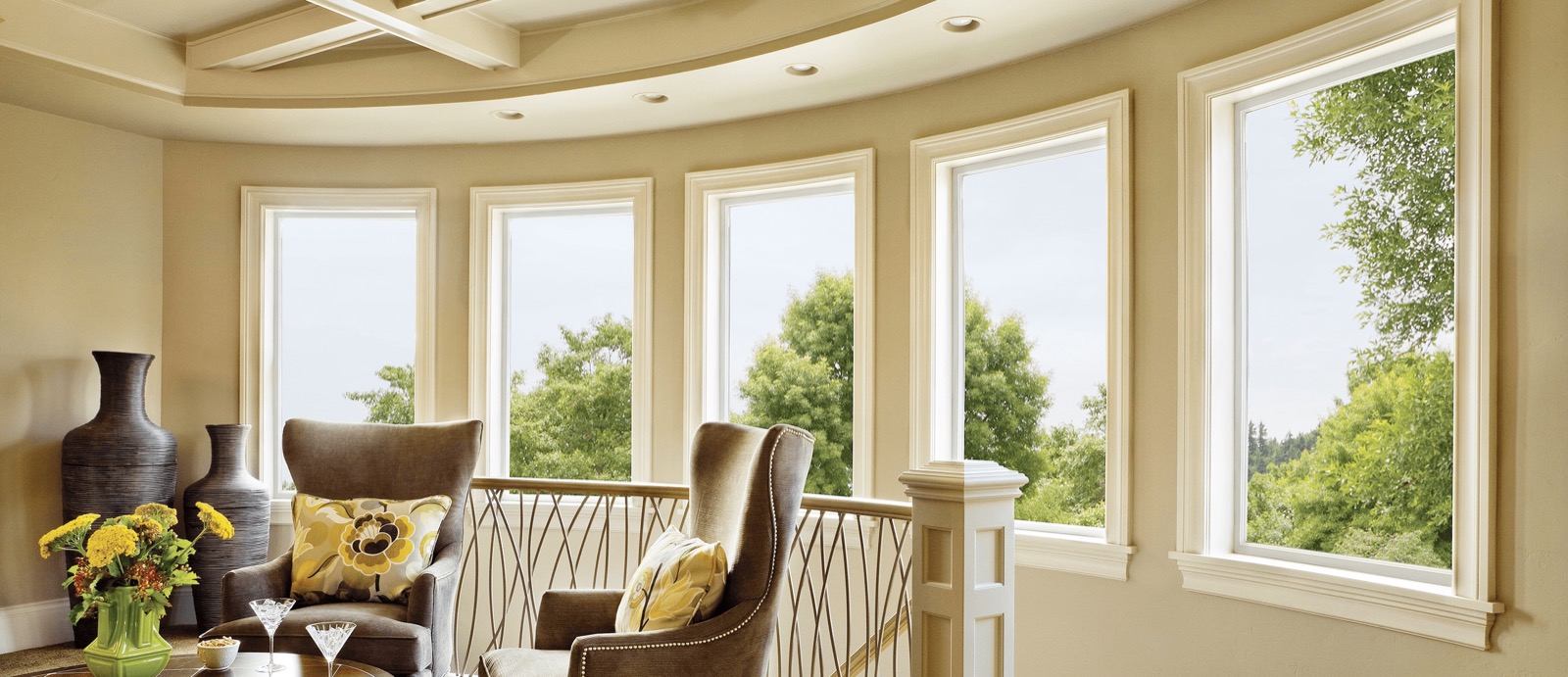
Both styles work well in Wisconsin. The better choice depends on how the room is used, the opening proportions, ventilation, and architectural fit.
How the two styles operate
A double-hung window has two sashes that move vertically. Many modern units tilt inward for cleaning. A casement window is hinged at the side and opens outward with a crank, creating a broad opening and closing against a compression seal.
Ventilation and room use
Casements can catch a breeze and offer a large clear opening. Double-hungs allow air to enter low and exit high when both sashes are opened. Over a kitchen counter, a casement crank may be easier to reach; next to a patio or walkway, an outward-swinging sash may be less practical.
Air sealing and winter comfort
Casement hardware pulls the sash firmly against weather seals, so the style often performs well in air-leakage testing. Double-hung windows can also be efficient when the product is well built, locked correctly, and installed carefully. Compare the exact ratings rather than assuming all windows of one style perform alike.
Appearance and older homes
Double-hung proportions are familiar on Milwaukee bungalows, colonials, and many Wauwatosa homes. Casements suit mid-century, contemporary, and European-influenced designs, but can also work in traditional openings with the right grid pattern. Consistency across the elevation is usually more important than following a rigid rule.
A practical selection checklist
Consider exterior clearance, interior reach, egress requirements, preferred screen location, cleaning access, ventilation, view, and the style of adjacent windows. A room-by-room plan can use more than one operating style while keeping exterior lines coordinated.
Your home is different
Get recommendations based on the actual project.
Schedule a free consultation with Tiltin's Milwaukee team.
Request an Estimate